MakiZeninandtheFalloftheClan:TheMostBrutalEpisodeofJujutsuKaisen
Episode 51 of Jujutsu Kaisen Season 3 delivers what critics call "absolute cinema" - a 28-minute masterpiece of revenge, sisterhood, and liberation that transforms Maki into the most terrifying force in jujutsu history.
Episode 51 of Jujutsu Kaisen Season 3, titled "Perfect Preparation", represents the culmination of Maki Zenin's arc and the Zenin clan massacre. With 28 minutes of uninterrupted content—the longest episode in the series' history—MAPPA delivered what critics and fans unanimously call "absolute cinema" and potentially the best episode ever produced of JJK.
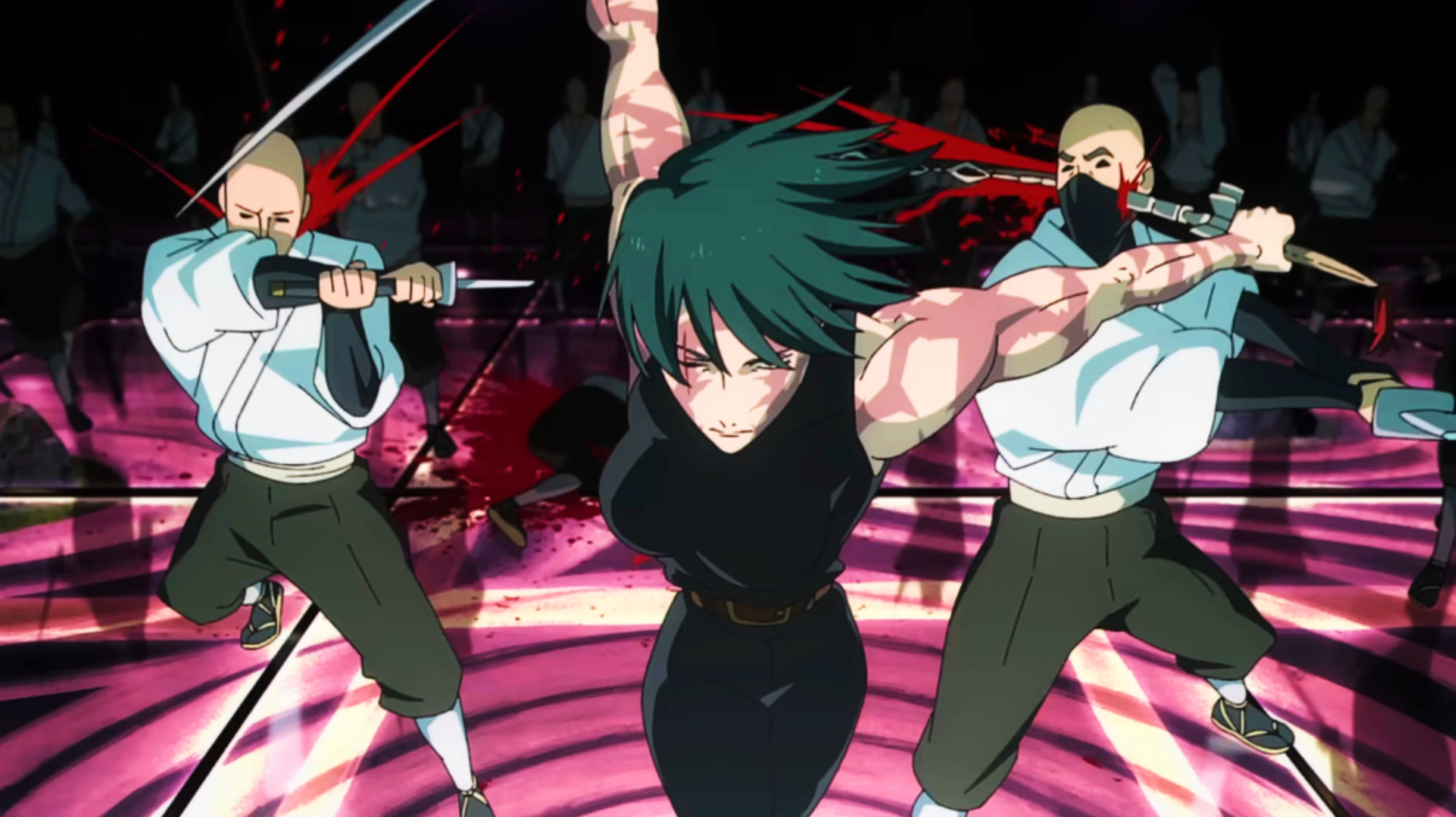
Maki's transformation from an underestimated sorcerer to an unstoppable force of destruction isn't just visual spectacle: it's a story of liberation, sisterhood, and revenge that redefines the rules of the jujutsu world.
The Setup: A Deadly Trap Orchestrated by Blood
After the Shibuya Incident, Maki returns to the Zenin compound with a seemingly simple mission: collect cursed tools from the family storehouse for the upcoming Culling Game battles. She has authorization from the clan's new leader, Megumi Fushiguro. What she finds instead is a calculated ambush.
The storehouse is completely empty. Inside waits only her father, Ogi Zenin, alongside her twin sister Mai's bloodied body with a severe abdominal wound. The conspiracy is clear: the clan's higher-ups—including Jinichi and Ogi himself—plan to execute Megumi, Maki, and Mai under the false accusation of being "rebels planning to free Satoru Gojo."
The most devastating revelation: the idea to murder his own daughters was Ogi's.
The fight between Maki and her father is brutal. She wields Dragon-Bone, a masterful cursed tool that manages to break Ogi's katana. But when she launches her final attack, Ogi reveals his cursed technique Blazing Courage—a flaming blade that works even without a physical sword. Maki falls defeated, severely injured.
Through tears, Ogi confesses his true motivation: he was never chosen as clan leader because he had "useless daughters." That's why he wants to eliminate them.
Ogi drags both sisters into a Disciplinary Chamber filled with Grade 2 and lower cursed spirits, abandoning them to be devoured.
"Destroy Everything": The Sacrifice That Changed the Twins' Fate
The sequence of Mai's sacrifice is the emotional heart of the episode and one of the most impactful scenes in modern anime. As both sisters lie dying among curses, Mai notices that Maki still has a pulse. She resuscitates her and transports them to a dream space—a serene beach that evokes their shared childhood.
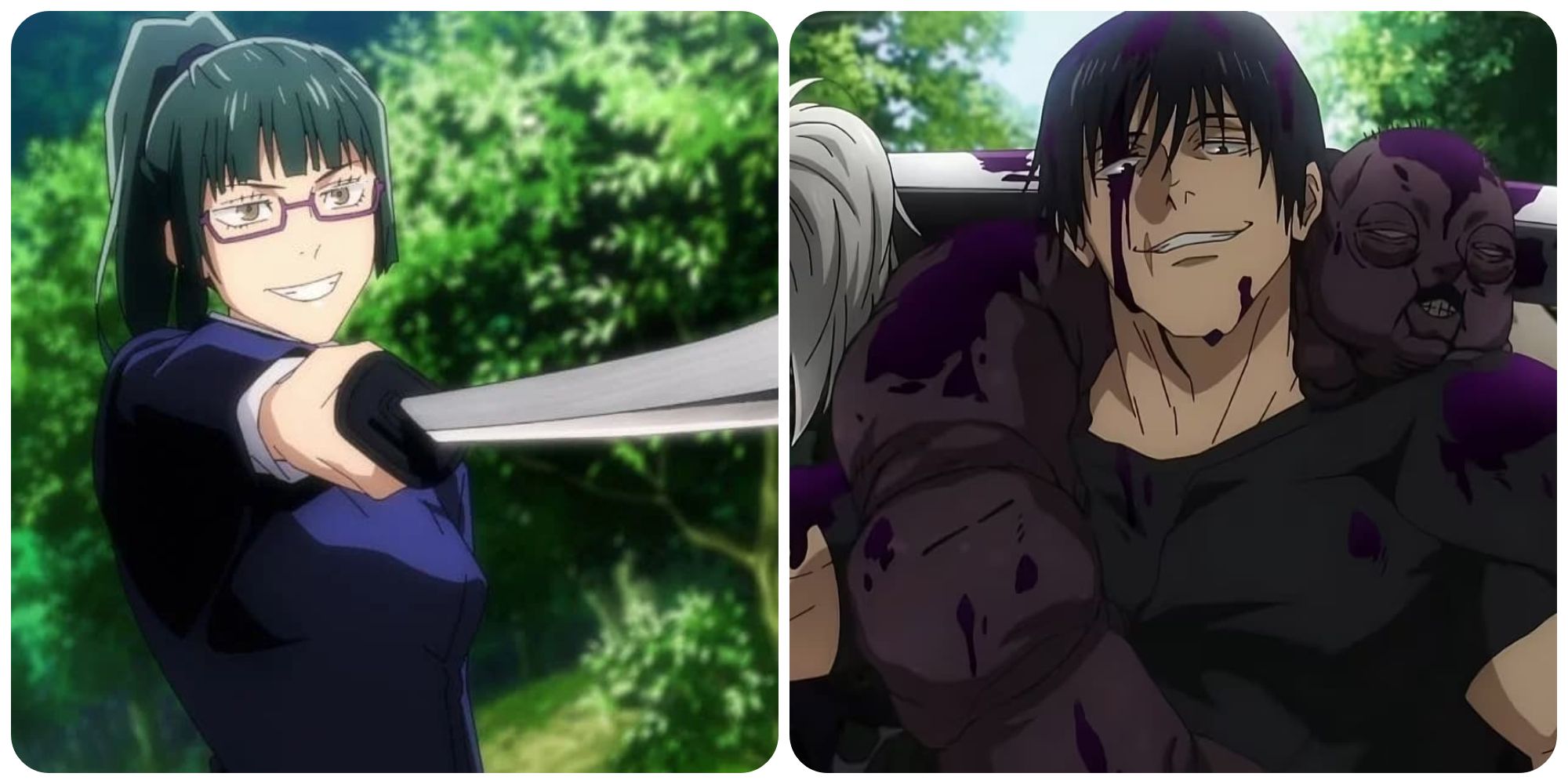
In this limbo between life and death, Mai reveals the cruel mechanics of their existence:
"In jujutsu, twins are considered one person."
Mai was born with the cursed technique (Construction) and the cursed energy that belonged to both of them. The small amount Maki possesses has paradoxically been the only thing holding her back from reaching her full Heavenly Restriction potential.
Mai recognizes that she never wanted to be a sorcerer, never had Maki's drive. And she understands she has been the only obstacle preventing her sister from reaching her true power. Her decision is final: she will use her technique Construction—which normally allows her to create only one bullet per day due to the enormous energy cost—to forge something extraordinary.
With all her remaining cursed energy and her own life as fuel, Mai creates an exact replica of the Split Soul Katana, the legendary sword once wielded by Toji Fushiguro—valued at approximately 500 million yen. This curved-blade katana with a fur tsuba can cut directly through the soul, ignoring any physical defense.
As Mai's life fades, she speaks the words that will define the rest of Maki's existence:
"Promise me one thing... destroy everything." ("Zenbu kowashite")
This phrase operates on multiple levels of meaning: it's literally an order for revenge against the clan, but it's also liberation—permission to destroy the ideology that defined them as "useless," to break the cycle of abuse instead of trying to reform it from within. It's profoundly ironic that Mai's technique is Construction, creating things, and her final creation is destined for absolute destruction.
The Transformation: When Maki Became Toji's Ghost
The moment Mai dies, the twin bond breaks completely. This triggers the full awakening of Maki's Heavenly Restriction:
| Attribute | Effect |
|---|---|
| Zero Cursed Energy | With Mai taking all their shared energy, Maki is completely empty of cursed energy |
| Superhuman Physique | Strength, speed, reflexes, durability, and perception at Toji Fushiguro levels |
| Sensory Invisibility | Undetectable by most sorcerers and cursed spirits who rely on sensing cursed energy |
| Barrier Immunity | Domain Expansions cannot target or confine her without physical structures |
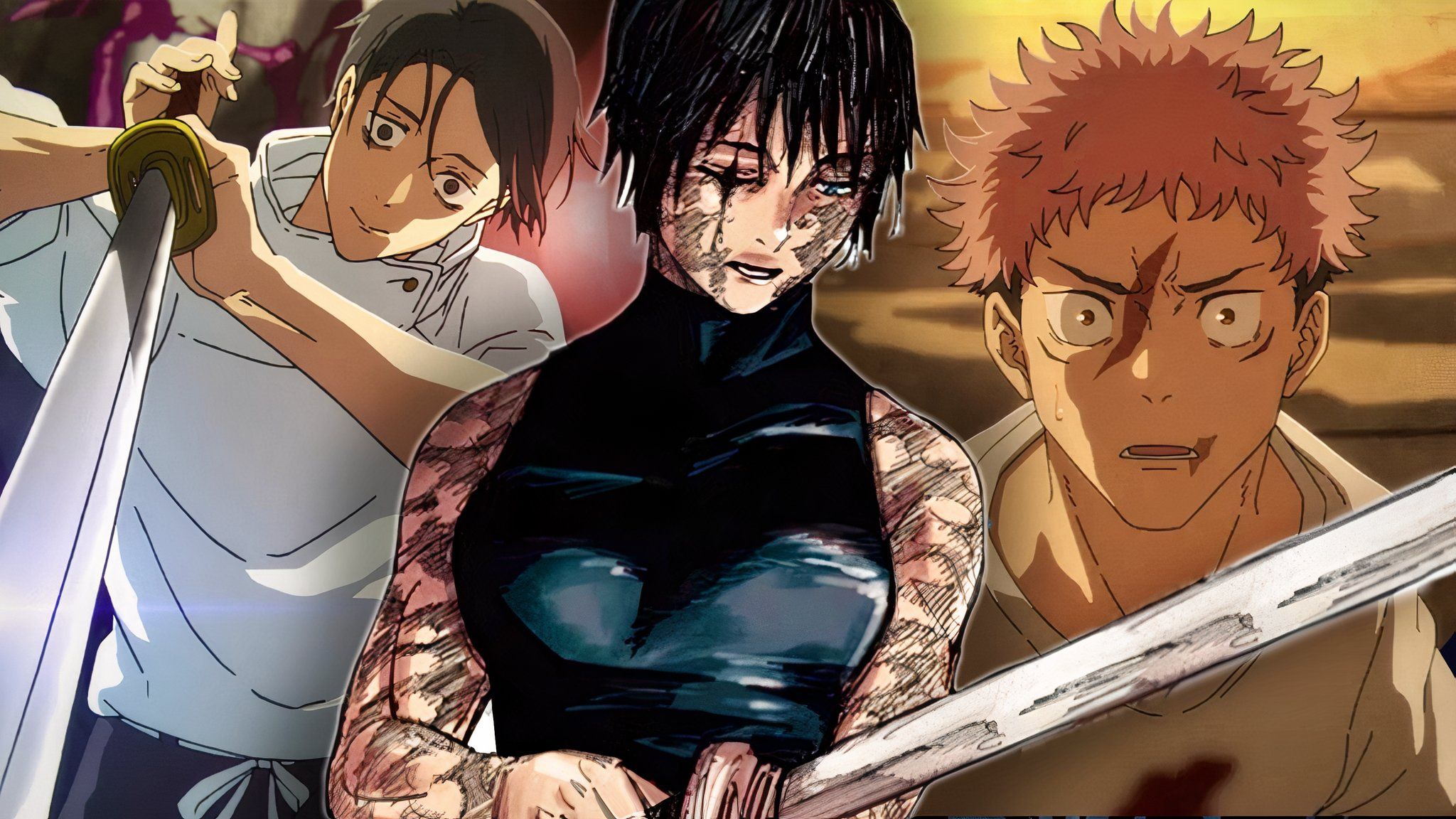
The massacre that follows is systematic and terrifying:
- Exterminates all cursed spirits in the disciplinary chamber in seconds—previously impossible for her
- Bisects her father Ogi's head with a single strike
- Annihilates the entire Kukuru Unit
- Destroys the Hei, the clan's elite squad, including Jinichi, Ranta, Chojuro, and Nobuaki
When the Hei confront her, they immediately recognize what has happened: "She's become another Toji."
The Naoya Confrontation
The encounter with Naoya Zenin is particularly satisfying. This arrogant, misogynistic cousin uses Projection Sorcery to reach subsonic speeds. Maki deciphers the rules of his technique and defeats him with a single devastating punch that shatters his jaw.
In a final twist, Maki's mother—mortally wounded by her own daughter—uses her last strength to stab Naoya in the back, ensuring both their deaths.
The official narration establishes: "Twelve years after his death, a demonic fighter equal to Toji Zenin has been created."
MAPPA and the Art of Poetic Violence: Visual Analysis
The direction by Shouta Goshozono and Risa Suzuki elevates this episode to cinematic territory rarely seen in weekly anime. The most impactful visual decision is the chromatic treatment of the massacre: the entire carnage sequence is animated in black, white, and gray, with red as the only distinctive color.
This explicit homage to Quentin Tarantino's Kill Bill transforms the violence into ritual without glorifying it.
Standout Moments
- Maki vs. Ogi choreography - Fluid, brutal, emotionally charged
- The Kukuru Unit sequence - Maki passes through them "as if they never existed"
- Naoya's defeat - The skull-crushing punch described by critics as "pure brilliance in animation"
- The dream sequence - Mai walking toward the ocean as a visual metaphor for death
The Season 3 opening anticipates this moment with references to classical paintings: "Two Children Sleeping" by Peter Paul Rubens shows the twins as infants, capturing "a version of their bond that could never exist for long."
A particularly acclaimed directorial decision: the absence of soundtrack in the final moments. This deliberate silence amplifies the post-massacre emotional void, communicating that Maki "didn't get the catharsis she expected... she remains as empty as before."
Two Rejected Souls, One Destiny: Maki and Toji Fushiguro
The connection between Maki and Toji transcends the superficial. Both were born with Heavenly Restriction—a natural binding vow that trades cursed energy for superhuman physical capabilities. But while Toji was born with zero cursed energy and complete benefits, Maki was limited by her twin bond with Mai.
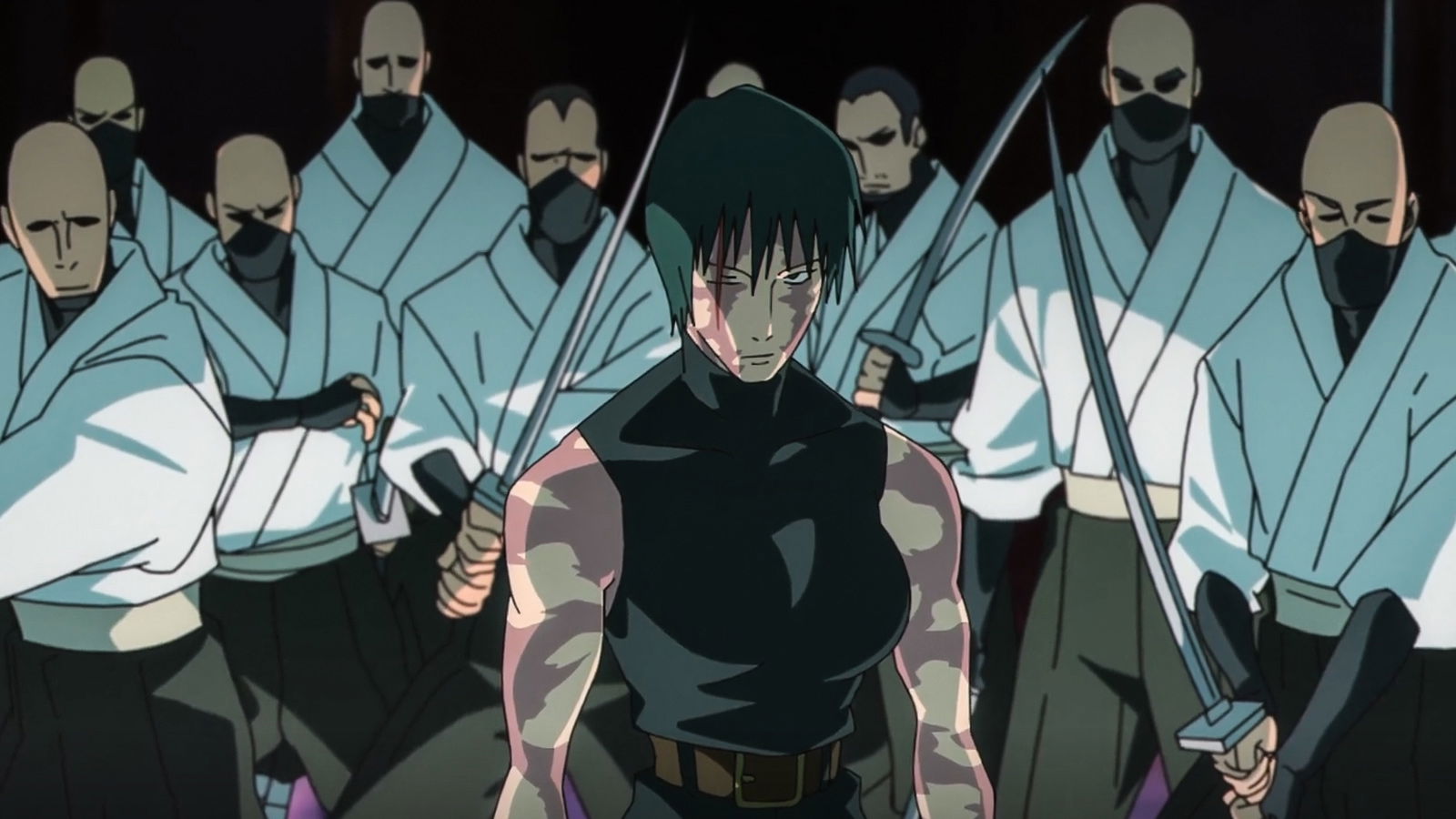
The Zenin clan treated both as aberrations. As a child, Toji was repeatedly thrown into disciplinary pits filled with cursed spirits as "punishment"—leaving him with his characteristic lip scar. According to creator Gege Akutami, this mistreatment caused his psychological instability. He eventually abandoned the clan, adopted his wife's surname (becoming Toji Fushiguro), and transformed into the mercenary who nearly killed young Gojo Satoru.
What makes Maki's arc so potent is how it inverts Toji's narrative:
| Toji | Maki |
|---|---|
| Escaped the clan | Destroyed the clan |
| Became an outsider | Became the instrument of judgment |
| Left to survive | Stayed to liberate |
Both demonstrated the fundamental hypocrisy of the Zenin clan: they rejected these members as "useless" when they actually possessed the potential to be the most powerful fighters of all.
The clan's philosophy—"Without cursed technique you're not a person, without cursed energy you're worthless"—created the instruments of its own destruction.
The System That Oppressed Them: Understanding the Zenin Clan
The Zenin clan is one of the Three Great Sorcerer Families alongside the Gojo and Kamo, with over a millennium of history. Their toxic philosophy valued cursed techniques above all else, ostracizing even family members whose power wasn't "acceptable."
The twins faced double discrimination: for being women AND for their "power deficiency." In jujutsu, twins are considered a "bad omen" and treated as one person. They were relegated to servitude from childhood, constantly ridiculed, and deliberately held back—Maki was artificially kept at Grade 4 despite her actual abilities.
Clan Structure
| Unit | Description | Fate |
|---|---|---|
| Hei | Elite squad (Semi-Grade 1 or higher) | Annihilated |
| Kukuru | Members without awakened cursed techniques | Annihilated |
| Akashi | Grade 2 or lower sorcerers | Annihilated |
Official records indicate no residue leading to a culprit was found except "small traces of an unknown cursed tool." Days later, the Kamo and Gojo clans voted to remove the Zenin clan from the Three Great Families. The clan was effectively destroyed as a major force.
From Page to Screen: How MAPPA Surpassed the Manga
The episode adapts chapters 148-152 of the manga, covering the entire massacre portion of the Perfect Preparation arc. Manga readers have unanimously praised the adaptation, and for good reasons: MAPPA wasn't just faithful to the source material—they significantly improved it.
The manga chapters were created during a difficult period for Gege Akutami, with health issues resulting in rougher edges in the action panels. MAPPA smoothed these imperfections and enhanced the choreography.
Original Additions by MAPPA
- Kill Bill-style chromatic palette - Didn't exist in the manga
- Kurosawa-esque direction - Long silences and compositions that let stillness breathe
- Enhanced emotional beats - Expanded dream sequence with additional visual poetry
The condensation of 5 chapters into a single episode worked better than the manga's weekly publications, creating a more cohesive and emotionally impactful experience.
Reception: "The Best JJK Episode Ever Created"
The critical and popular response has been overwhelmingly positive:
| Platform | Rating | Notes |
|---|---|---|
| IMDB | 10/10 | 78 reviews, vast majority perfect scores |
| Crunchyroll | 4.9/5 | Highest-rated episode of the season |
| Universal acclaim | "Absolute cinema," "Episode of the year," "Kill Bill vibes" |
Voices in the Void called it "Jujutsu Kaisen at its peak." Film Fugitives described MAPPA's animation as "nothing short of poetry."
The only minority criticisms mentioned lack of prior emotional construction for some secondary characters who die, and occasional complaints about "plot armor." But the consensus is clear: this episode transformed Maki from a "C-tier character" to one of the most relevant figures in the series.
Conclusion: Destruction as Rebirth
Maki Zenin's arc represents one of the most thematically rich moments in Jujutsu Kaisen. It's not simply a revenge story—it's a meditation on liberation, identity, and the cost of breaking oppressive systems. Mai didn't just ask for revenge; she gave Maki permission to burn the entire structure down instead of trying to become its leader and reform it from within.
The Split Soul Katana that Mai created with her last breath isn't just a weapon: it's Mai herself, eternally present alongside her sister. "I will always be part of you," she said before dying. Every strike Maki delivers with that sword carries the weight of a promise and the love of a sister who finally let go.
What makes this episode exceptional isn't the spectacular violence—it's that the violence has meaning. Maki emerges from the massacre not morally corrupted, but morally clearer. Her scars from her father's flames become "badges of freedom" rather than marks of defeat. Destruction becomes rebirth.
As the episode establishes in its silent finale: Maki didn't achieve catharsis. She remains empty. But it's a different emptiness—no longer defined by a system that declared her useless, but by herself, on her own terms, wielding the sword her sister gave her with her final words:
"Destroy everything."
What did you think of this episode? The way MAPPA handled the transition from brutal violence to emotional devastation is something I've rarely seen done this well. This is Jujutsu Kaisen at its absolute best.